
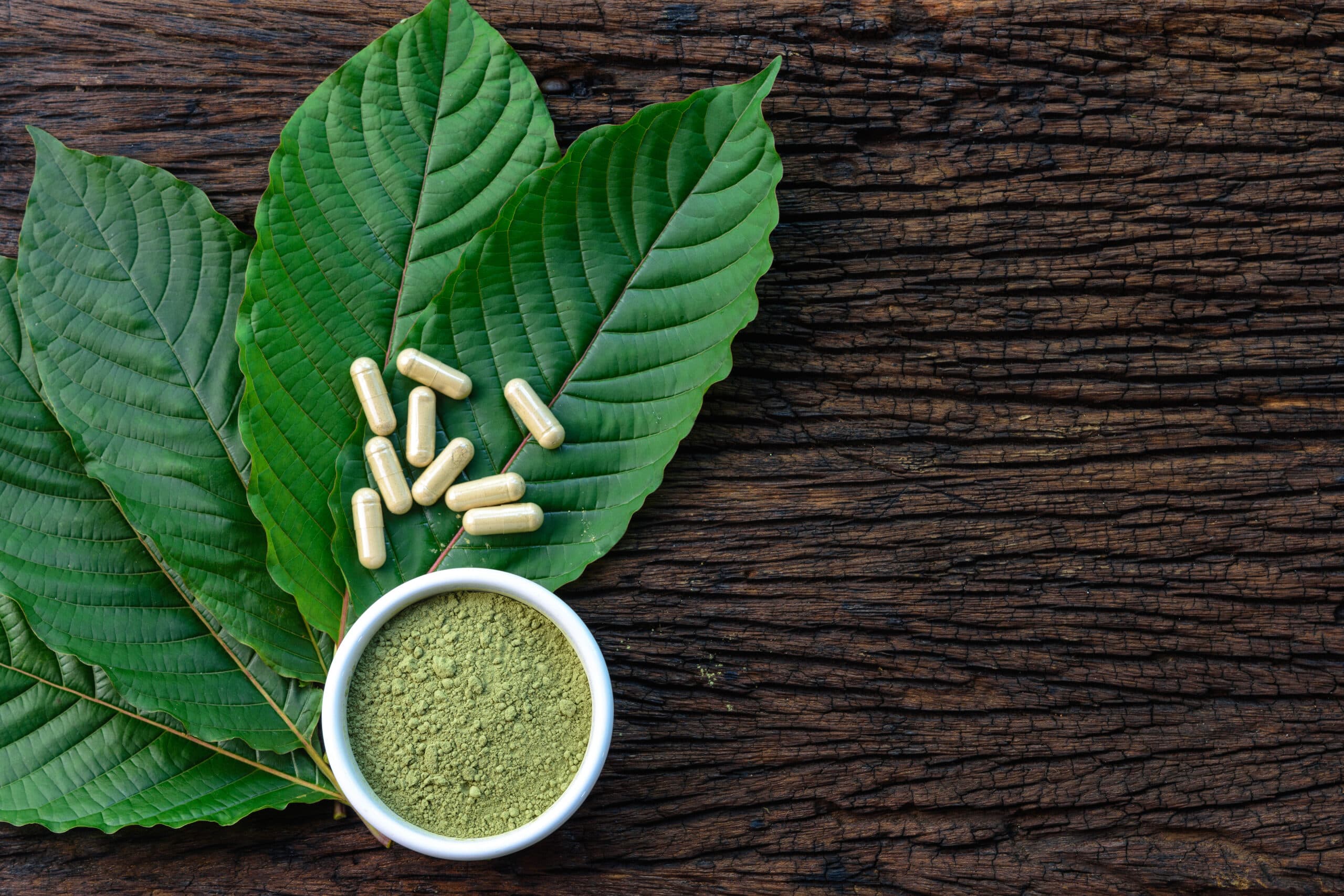
Kratom is not classified the same way as heroin, fentanyl, oxycodone, hydrocodone, or Percocet. It comes from a plant and contains several active compounds, which makes it different from prescription pain pills or illegal opioids.
The confusion comes from how kratom can act in the body. Some of its compounds connect with opioid receptors, which helps explain why people may use it for pain, relaxation, or relief from opioid withdrawal.
That same interaction is also why kratom can become complicated. For some people, repeated use can lead to tolerance, physical dependence, and withdrawal symptoms when they try to stop.
How Kratom Affects the Brain
Kratom contains compounds called alkaloids. Two of the most discussed are mitragynine and 7-hydroxymitragynine, often shortened to 7-OH. {insert internal link to 7-OH blog}
These compounds can interact with opioid receptors, which are part of the brain and body’s pain, reward, and stress regulation systems.
That interaction may contribute to effects like:
- Pain relief
- Relaxation
- Mood changes
- Sedation at higher doses
- Energy or stimulation at lower doses
- Reduced opioid withdrawal symptoms
- Tolerance
- Dependence
- Withdrawal
The important part is that the body may respond to kratom in ways that look familiar to people who have taken opioids or pain pills before.
That is why someone may start using kratom for relief and later find that stopping is much harder than expected.
Kratom vs Opioids
Kratom and opioids are not identical, but they can overlap in how they affect some people.
Prescription opioids like oxycodone, hydrocodone, and Percocet are medications that can reduce pain but also carry risk for misuse, dependence, and overdose. Illegal opioids like heroin and fentanyl carry serious risks, especially because strength and contamination can be unpredictable.
Kratom is different. It is a plant-derived substance that people often buy as powder, capsules, extracts, drinks, tablets, gummies, or newer concentrated products.
But “different” does not mean harmless.
Here is the practical comparison:
- Opioids and kratom can both affect opioid receptors.
- Both can produce relief or mood changes.
- Both can lead to tolerance for some people.
- Both can cause withdrawal after repeated use.
- Both can become difficult to stop when the body has adapted.
The difference matters, but so does the overlap.
This is where people can get stuck. They may tell themselves, “At least it’s not pain pills,” while still living in a pattern that looks very familiar: use, relief, tolerance, discomfort, repeat.
Why the Difference Matters
The category matters because people make decisions based on what they think kratom is.
If someone believes kratom is only a natural supplement, they may be less likely to notice risk.
If someone believes kratom is “basically heroin,” they may feel ashamed, panic, or avoid asking for help.
Neither extreme is especially useful.
A better way to think about kratom is this:
Kratom is not the same as heroin, fentanyl, oxycodone, or Percocet, but it can affect opioid receptors and may create opioid-like patterns for some people.
That framing leaves room for nuance. Annoying little word. Important little word.
It also helps explain why someone can feel confused by their own experience. They may have started kratom because it felt safer, legal, or easier to justify, then later noticed cravings, withdrawal, or a growing reliance on it.
Can Kratom Cause Dependence?
Yes, kratom can cause dependence for some people.
Dependence means the body has adapted to a substance and reacts when that substance is reduced or stopped. This is not always the same thing as addiction, but the two can overlap.
Kratom dependence may look like:
- Feeling off when you miss a dose
- Needing kratom to start the day
- Taking kratom to avoid withdrawal
- Increasing the amount over time
- Keeping extra kratom around to avoid running out
- Feeling anxious when you do not have access to it
- Using stronger forms like extracts, tablets, or 7-OH products
Dependence can sneak up because it often begins as problem-solving. Someone uses kratom for pain, stress, anxiety, energy, or opioid withdrawal. Then the body adapts. Then stopping feels worse than expected.
A very inconvenient plot twist, but a common one.
Can Kratom Cause Withdrawal?
Yes, kratom withdrawal {insert internal link to kratom withdrawal blog} can happen when someone who has used kratom regularly cuts back or stops.
Symptoms can vary widely, but may include anxiety, irritability, restlessness, sweating, body aches, stomach issues, diarrhea, sleep problems, low mood, fatigue, and cravings.
The withdrawal experience may feel opioid-like for some people because of kratom’s interaction with opioid receptors.
The severity can depend on:
- How much kratom someone uses
- How often they use it
- Whether they use powder, capsules, extracts, tablets, or 7-OH products
- How long they have used it
- Whether other substances are involved
- Physical and mental health history
If withdrawal symptoms are severe, other substances are involved, or stopping feels unsafe, medical guidance matters.
What About 7-OH?
7-OH usually refers to 7-hydroxymitragynine, a kratom-related compound that can interact strongly with opioid receptors.
Some newer products are marketed as 7-OH tablets, pills, vapes, powders, extracts, or other concentrated forms.
This matters because 7-OH products may feel stronger than traditional kratom leaf products. For some people, that may mean faster tolerance, stronger cravings, and more difficult withdrawal.
If someone is using 7-OH daily, increasing their dose, switching products to get stronger effects, or feeling withdrawal between doses, that is worth taking seriously.
This is not just a technical ingredient question. It is a pattern question.
When Kratom Use Needs Support
Kratom use may need support when it starts creating a cycle that is hard to interrupt.
That cycle might look like:
Use kratom for pain, anxiety, energy, mood, or withdrawal.
Feel relief.
Need it more often.
Feel uncomfortable without it.
Use again to feel normal.
At that point, the issue may not be whether kratom “counts” as an opioid.
The more useful question is whether your life is starting to organize around it.
Support may be worth considering when:
- You have tried to stop and returned to the same pattern
- You feel withdrawal when you cut back
- You are using kratom to avoid feeling sick
- You are moving toward stronger products
- You are hiding or minimizing use
- Your mood, sleep, work, money, or relationships are being affected
- You feel stuck between wanting to stop and not wanting to go through withdrawal
Some people may benefit from medical guidance and outpatient therapy. Others may need more structure through IOP, PHP, detox support, or residential rehab.
The goal is not to win a debate about what kratom is. The goal is to get honest about what it is doing.
Kratom Treatment in Raleigh, NC
If kratom has become difficult to stop, outpatient treatment may be an option depending on your withdrawal symptoms, safety, other substance use, and daily stability.
Green Hill offers substance use treatment in Raleigh, including PHP and IOP options for people struggling with kratom, 7-OH products, opioids, alcohol, and other substances.
For people in Raleigh, Cary, Durham, Chapel Hill, and the broader Triangle area, treatment can help with cravings, withdrawal concerns, relapse prevention, mood symptoms, and rebuilding daily routines.
You do not need to know whether kratom is technically an opioid before asking for help. You only need to know that the pattern is starting to concern you.
Start with Clarity
If you are asking whether kratom is an opioid, there is probably a reason.
Maybe you are noticing withdrawal. Maybe the effects feel stronger than you expected. Maybe you started using kratom to avoid opioids and now feel stuck with something else. Maybe you are simply trying to understand why stopping has been harder than it “should” be.
That question is worth taking seriously.
The Green Hill admissions team can help you think through your kratom use, whether medical guidance may be needed, and whether IOP, PHP, or another treatment option in Raleigh makes sense.